ECCLESIOLOGY

This is a faithful saying:
If a man desires the position of a bishop (episkopoi),
he desires good work.
1 Timothy 3, 1 [NKJV]
Let the priests (presbyteroi) that rule well be esteemed worthy of double honor:
especially those who labor in the word and doctrine.
1 Timothy 5, 17 [DRB]
Likewise, deacons (diakonoi) must be reverent, not double-tongued,
not given to much wine, not greedy for money.
1 Timothy 3, 8 [NKJV]
.
My Explications of the Patristic Texts
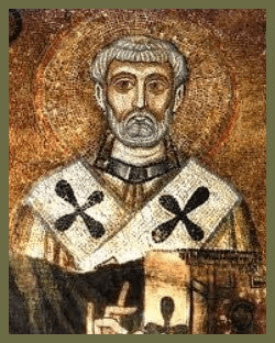
Clement of Rome (c. A.D. 96)
1st Epistle to the Corinthians, 44:1-2
“Our apostles also knew, through our Lord Jesus Christ, that there would be strife on account of
the office of the episcopate. For this reason, therefore, since they had obtained a perfect fore
knowledge of this, they appointed those [ministers] already mentioned, and afterward gave
instructions, that when these should fall asleep, other approved men should succeed them in their
ministry.”
The passage is taken from the writings of early Christianity (Apostolic era) and discusses the appointment of ministers to the position of bishop. It highlights the foresight of the apostles, who were the leaders of the early Church, in recognizing that there would be strife and conflict over the office of the bishop. The apostles were aware that the position of bishop would be a point of contention, and as such, they appointed certain ministers to this position. They also instructed that when these individuals passed away, other approved men would succeed them in their ministry (Apostolic succession). This was done because they had a perfect understanding of what would come.
Clement emphasizes the importance of succession planning in the early Church and the need for qualified individuals to lead the Church. The apostles had a forward-thinking approach to leadership and recognized the importance of proper planning to ensure the continuity and longevity of the Church. Overall, the text serves as a testament to the wisdom and insight of the apostles in their leadership of the early Church. It also highlights the importance of foresight, planning, and qualified leadership in ensuring the success and growth of the Church.
.

Ignatius of Antioch (c. A.D. 110)
Epistle to the Smyrnaens, 8
“See that ye all follow the bishop, even as Jesus Christ does the Father, and the presbytery as ye would the apostles; and reverence the deacons as the institution of God. Let no man do anything connected with the Church without the bishop. Let that be deemed a proper Eucharist, which is [administered] either by the bishop or by one to whom he has entrusted it. Wherever the bishop shall appear, there let the multitude [of the people] also be; even as, wherever Jesus Christ is, there is the Catholic Church. It is not lawful without the bishop to either baptize or celebrate a love-feast, but whatsoever he shall approve of, that is also pleasing to God, so that everything that is done may be secure and valid.”
This passage is a part of a letter written by Ignatius, an early Christian bishop, to the Smyrnaeans, in which he provides guidance on how to conduct oneself within the Church. Ignatius advises the readers to follow the bishop just as Jesus Christ follows the Father. This means that the bishop’s authority should be obeyed as Jesus obeyed his Father’s will. Additionally, he advises the readers to follow the presbytery, a group of elders, as they would follow the apostles. This means that the presbytery should be respected and followed as they were the representatives of the apostles.
Furthermore, Ignatius emphasizes the importance of respecting the deacons, as they were an essential part of the Church’s organizational structure. They were responsible for serving the Church in various capacities, including caring for the poor and sick. He stresses that the deacons were an institution of God and should be revered as such. He also stresses the importance of the bishop’s authority within the Church. He emphasizes that no one should do anything related to the Church without the bishop’s permission. The bishop’s authority extends to the administration of sacraments, such as the Eucharist, which should be administered only by the bishop or someone he has authorized. Ignatius urges the people to follow the bishop wherever he goes, just as they would follow Jesus Christ. He emphasizes that wherever the bishop appears, the people should also be present, just as wherever Jesus Christ is, there is the Catholic Church.
Finally, Ignatius explains that baptizing or celebrating a love feast is not lawful without the bishop’s approval. Love feasts, also known as “agape meals,” were communal gatherings where participants shared a simple meal and participated in services to promote fellowship, brotherhood, unity, and Christian love. Love feasts had their roots in the first century among early Christians and share similarities with the more recognized Lord’s Supper, or Eucharist. The bishop had the authority to regulate the Church’s practices, including this one. Indeed, Ignatius notes that whatever the bishop approves of is pleasing to God and that everything done in accordance with the bishop’s authority is secure and valid.
.
Hegesippus (c. A.D. 180)
fragment in Eusebius Ecclesiastical History, 4:22
“Hegesippus and the Events which he mentions. Hegesippus, in the five books of Memoirs which have come down to us, has left a complete record of his own views. In them, he states that he met many bishops on a journey to Rome and received the same doctrine from all. It is fitting to hear what he says after making some remarks about the epistle of Clement to the Corinthians. His words are as follows: ‘And the church of Corinth continued in the true faith until Primus was bishop in Corinth. I conversed with them on my way to Rome and abode with the Corinthians for many days, during which we were mutually refreshed in the true doctrine. When I came to Rome, I remained there until Anicetus, whose deacon was Eleutherus. Soter and Eleutherus succeeded Anicetus. In every succession, and in every city that is held which is preached by the law and the prophets and the Lord.’”
The text describes the views of Hegesippus, an ancient writer and chronicler who left behind five books of Memoirs. He is known as a prominent Christian historian, and his writings provide valuable insights into the early history of the Christian Church. During his journey to Rome, he met several bishops who taught him the same doctrine. This indicates that the bishops shared a common understanding of religious teachings. Hegesippus was impressed by this unity of faith and believed it was a sign that the Church was founded on solid and unchanging principles. The passage also mentions that Hegesippus commented on Clement’s epistle to the Corinthians. Specifically, he stated that the church of Corinth remained in the true faith until Primus became bishop. Primus may have introduced some changes to the teachings of the church of Corinth that contravened the teachings of the Roman church.
Hegesippus spent many days with the Corinthians, and the passage notes that their teachings mutually refreshed him. Apparently, he found their teachings to be enlightening and inspiring. He was impressed by their commitment to the Christian faith and believed that they were an excellent example of how Christians should live their lives. The passage goes on to state that Hegesippus stayed in Rome until Soter and Eleutherus succeeded the bishop Anicetus. He must have spent considerable time in Rome and may have interacted with many other religious leaders during his stay. He was likely involved in important theological debates and would have played a significant role in shaping the early Church’s doctrines.
According to Hegesippus, the law, prophets, and the Lord preached the true doctrine in every succession and city. This suggests that the church’s teachings are consistent and are based on the teachings of the law, prophets, and the Lord. He believed the Christian faith was founded on timeless principles that would guide believers for generations. Overall, the passage provides detailed insights into the views of Hegesippus and the religious teachings prevalent during his time. It offers valuable information about the early Christian Church’s history and its challenges as it developed into the institution we know today.
.
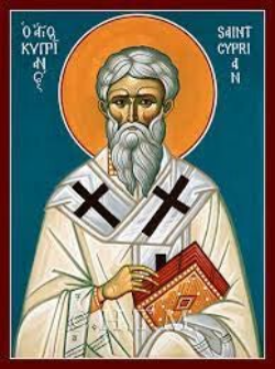
Cyprian of Carthage (A.D. 250)
To the Lasped, Epistle 26/33
“Our Lord, whose precepts and admonitions we ought to observe, describing the honor of a bishop
and the order of His Church, speaks in the Gospel and says to Peter: “I say unto thee, That thou
art Peter, and upon this rock will I build my Church; and the gates of hell shall not prevail against
it. And I will give unto thee the keys of the kingdom of heaven: and whatsoever thou shalt bind
on earth shall be bound in heaven: and whatsoever thou shall loose on earth shall be loosed in
heaven.” Thence, through the changes of times and successions, the ordering of bishops and the
plan of the Church flow onwards so that the Church is founded upon the bishops, and these same
rulers control every act of the Church. Since this, then, is founded on the divine law, I marvel that
some, with daring temerity, have chosen to write to me as if they wrote in the name of the Church;
when the Church is established in the bishop and the clergy, and all who stand fast in the faith. Far
be it from the mercy of God and His uncontrolled might to suffer the number of the lapsed to be called
the Church… But if certain lapsed ones claim to be the Church, and if the Church be among them and
in them, what is left but for us to ask of these very persons that they would deign to admit us into the
Church? Therefore it behooves them to be submissive, quiet, and modest, as those who ought to
appease God in remembrance of their sin, and not to write letters in the name of the Church when
they should rather be aware that they are writing to the Church.”
Cyprian, a bishop in Carthage, writes a letter to Cornelius, another bishop. He discusses the significance of bishops in the Church, stating that they are the Church’s foundation and rulers and control every act of the Church. He uses a quotation from the Gospel to support this idea, where Jesus tells Peter that He will build His Church upon him.
Cyprian requests that the lapsed Christians claiming to be in communion with the Church send him their names and a copy of the indulgence certificate they received so that he may respond appropriately to each person. He commends the lapsed Catholics who have done penance for their denial of Christ and are waiting patiently for reunion with the Church.
Furthermore, Cyprian addresses the issue of the “lapsed” Christians who had renounced their faith and offered sacrifices to the Roman gods during times of persecution and then sought to be readmitted to the Church. He argues that it is not fitting for them to claim that they are the Church and that the Church is established in the bishop, clergy, and all those who stand fast in their faith. He also emphasizes that it is only through the mercy of God that the lapsed can be readmitted. Cyprian also criticizes those who write to him as if they represent the Church when, in fact, the Church is established in the bishop and the clergy. He urges those who have lapsed to be submissive, quiet, and modest as they seek to appease God and be readmitted to the Church.
Overall, the text emphasizes the importance of bishops in the Church, the need for humility and submission among those who seek to be part of it, and the role of divine law and God’s mercy in the governance of the Church.
.

Athanasius of Alexandria (A.D. 355)
Letter to Dracontius 49: 2, 4
“And before you had received the grace of the episcopate, no one knew you; but after you became
one, the laity expected you to bring them food, namely instruction from the Scriptures… If all
agreed with your present advisers, how would you have become a Christian since there would be
no bishops? Or if our successors are to inherit the state of mind, how will the Churches be able to
hold together?”
The Epistle 49, 1-10 is directed towards a bishop named Dracontius. Bishop Athanasius expresses disappointment and disapproval towards Dracontius for his conduct, which causes grief and offense to those around him. The author questions how Dracontius will be able to defend himself against the accusations made against him and how he will be able to restore the broken peace that he has caused. He reminds Dracontius that he was chosen to be a leader of the people and, therefore, has a responsibility to provide them with guidance and instruction from the Scriptures. Athanasius expressed concern that Dracontius had been neglecting his duty by focusing on his needs instead of those of his flock. This neglect has caused the people to suffer, leaving them hungry for guidance and instruction. The author warns Dracontius that he will be held accountable for his actions and must be prepared to face the consequences. Overall, the epistle is a cautionary message to a religious leader about the importance of fulfilling his responsibilities and caring for those under his guidance.
In the above section, Athanasius explicates the significance of the office of bishop. He argues that bishops would be unnecessary if everyone had the same knowledge and insight as the bishop’s current advisers. This is because the primary role of a bishop is to provide direction and leadership to the Church, especially in matters of faith and morals. In addition, he emphasizes the importance of maintaining unity within the Church and the role of bishops in achieving this goal. He asserts that if the successors of the current bishops do not possess the same level of knowledge and insight, the Church may struggle to remain cohesive and unified. Therefore, bishops must continue to provide spiritual guidance and instruction to the people to ensure that the Church remains a unified and harmonious community.
.
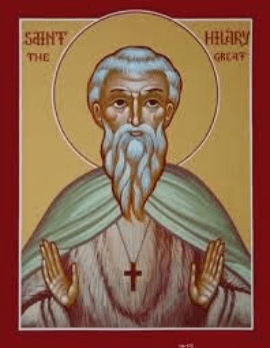
Hilary of Poitiers (A.D. 359)
On the Trinity
“The Blessed Apostle Paul, in laying down the form for appointing a bishop and creating by his
instructions an entirely new type of member of the Church, has taught us in the following words
the sum total of all the virtues perfected in him:–Holding fast the word according to the doctrine
of faith that he may be able to exhort to sound doctrine and to convict gainsayers. For there are
many unruly men, vain talkers, and deceivers. In this way, he points out that the essentials of
orderliness and morals are only profitable for good service in the priesthood if, at the same time,
the qualities needful for knowing how to teach and preserve the faith are not lacking, for a man is
not straightway made a good and useful priest by a merely innocent life or by mere knowledge of
preaching.”
The Bishop of Poitiers discusses the teachings of the Apostle Paul regarding the appointment of bishops and the creation of a new type of member of the Church. He emphasizes the importance of possessing moral and intellectual qualities to become a practical and valuable priest. Moreover, Hilary teaches that a mere innocent life or knowledge of preaching is not sufficient to become a good and productive priest. According to the Apostle Paul, a priest must hold fast to the word according to the doctrine of faith, be able to exhort sound doctrine, and convict gainsayers. This is because many unruly men, vain talkers, and deceivers can lead others astray if they are not countered with the proper teachings and virtues.
Hilary highlights the importance of orderliness, good morals, and the qualities needed to teach and preserve the faith. The qualities required for a successful priesthood include exhorting sound doctrine, which means encouraging others to follow the correct teachings of the Church. Convicting gainsayers means being able to refute those who oppose the teachings of the Church. The text underscores the importance of moral and intellectual qualities to become a successful priest. A person seeking to become a good and useful priest must be able to teach and preserve the faith while possessing the qualities needed to counter those who oppose the teachings of the Church.
.
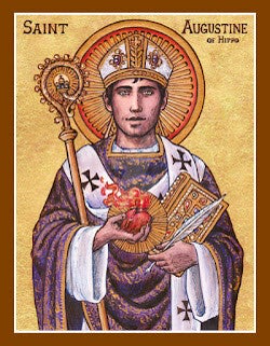
Augustine of Hippo (A.D. 388)
On the Morals of the Catholic Church, 69
“There is not, however, such narrowness in the moral excellence of the Catholic Church as that I
should limit my praise of it to the life of those here mentioned. For how many bishops have I
known most excellent and holy men, how many, presbyters, how many deacons, and ministers of
all kinds of the divine sacraments, whose virtue seems to me more admirable and more worthy of
commendation on account of the greater difficulty of preserving it amidst the manifold varieties
of men, and in this life of turmoil!”
The text emphasizes the moral excellence of the Catholic Church and how it is not limited to just a few individuals. Augustine profoundly appreciates the many bishops, presbyters, deacons, and ministers who have been excellent and holy men of the faith. He believes their virtue is worthy of commendation and admiration, especially given their challenges. He acknowledges that these individuals must maintain their moral excellence amidst the manifold varieties of men and in this life of turmoil. They must navigate the complexities of human nature and the many difficulties that arise in their roles as religious leaders. Despite these challenges, they uphold their values and remain steadfast in their faith, making their virtues even more commendable.
Augustine’s admiration for the Catholic Church’s moral excellence extends beyond the individuals mentioned here. The Church is praised for its commitment to moral excellence and the many ways it has contributed positively to society. He highlights the Church’s role in promoting virtues such as love, compassion, and kindness, which are essential for building a better world.
Thus, the text celebrates the moral excellence of the Catholic Church and its many leaders who have demonstrated great virtue. It acknowledges these individuals’ challenges and the importance of upholding their values amidst the various complexities of human nature. The author’s admiration extends beyond individuals to the Church and its positive impact on society.
.
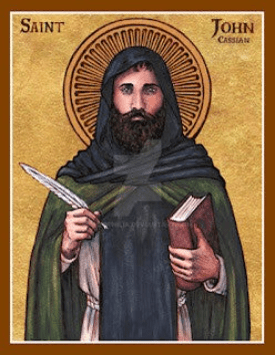
John Cassian (ante A.D. 435)
Institutes, 2:5,11:14
“For in the early days of the faith when only a few, and those the best of men, were known by
the name of monks, who, as they received that mode of life from the Evangelist Mark of blessed
memory, the first to preside over the Church of Alexandria as Bishop…But sometimes, it creates a
wish to take holy orders and a desire for the priesthood or diaconate. It represents that if a man
has even against his will received this office, he will fulfill it with such sanctity and strictness that
he will be able to set an example of saintliness even to other priests and that he will win over
many people, not only by his manner of life but also by his teaching and preaching.”
John Cassian’s Institutes provides insight into the early days of Christianity when only a few men were known as monks. These men were considered the best and most pious and followed a mode of life received from the Evangelist Mark. According to tradition, Mark was the first bishop of the Church of Alexandria, and he is credited with introducing this way of life to the monks. This mode of life was characterized by strict adherence to religious practices and the pursuit of spiritual perfection. Monks lived in seclusion, dedicating themselves to contemplation, prayer, and the study of religious texts. They renounced worldly pleasures and possessions, living a life of poverty and simplicity.
The priesthood was seen as a higher calling, requiring a deep commitment to God and the Church. Those who entered the priesthood were expected to live a life of exemplary piety and to serve as spiritual leaders in their communities. John Cassian suggests that even if a man had unwillingly received the priesthood office, he would fulfill his duties with great sanctity and strictness. This would make him an example of saintliness to other priests and help him win over many people through his teaching and preaching. The author thus emphasizes the importance of fulfilling religious duties with dedication and commitment, regardless of the circumstances of one’s appointment.
Overall, John Cassian provides a detailed picture of the early days of Christianity and the role of monks and priests in that period. He highlights the importance of leading a pious and contemplative life and the significance of the priesthood as a spiritual calling.
.
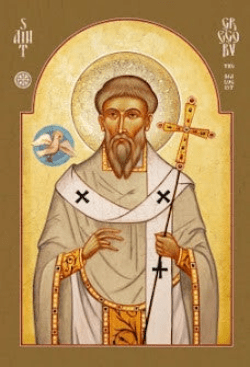
Pope Gregory the Great [590-604] (A.D. 595)
To Augustine, Epistle 64
“Through my most beloved son Laurentius, the presbyter, and Peter, the monk, I received thy
Fraternity’s letter, in which thou hast been at pains to question me on many points…Augustine’s
first question. I ask, most blessed father, concerning bishops, how they should live with their
clergy And concerning the offerings of the faithful received at the altars, both into what portions
they should be divided and how the bishop should deal with them in the Church. The answer of
St. Gregory, Pope of the City of Rome. Holy Scripture, which no doubt thou knowest well, bears
witness, especially the epistles of the blessed Paul to Timothy, in which he studied to instruct him
how to behave himself in the house of God. Now it is the custom of the Apostolic See to deliver an
injunction to bishops when ordained, that of all emoluments that come in four divisions should be
made: to wit, one for the bishop and his household on account of hospitality and entertainment;
another for the clergy; a third for the poor; and a fourth for the reparation of Churches.”
The text is a letter written by Pope Gregory, Bishop of Rome, to Augustine, a Catholic monk who would become the first Archbishop of Canterbury in 597, in response to a letter he received from someone who had asked him for advice on various aspects of church governance. Specifically, the person asked about the relationship between bishops and their clergy and how the offerings of the faithful should be managed in the Church. In his response, Gregory began by pointing out that Holy Scripture, particularly the epistles of the blessed Paul to Timothy, provides guidance for bishops on how to conduct themselves in the house of God. He then explained that when a bishop is ordained, the Apostolic See, or the Holy See of Rome, provides instructions that divide all emoluments into four portions.
Pope Gregory explained that these four portions are divided as follows: the first portion is for the bishop and his household to cover the costs of hospitality and entertainment; the second portion is for the clergy; the third portion is for the poor; and the fourth portion is for the repair of Churches. He further elaborated that the first portion is intended to ensure that the bishop can provide a hospitable and welcoming environment for visitors and guests of the Church. The second portion is designed to provide for the needs of the clergy, who serve the Church in various capacities. The third portion is intended to support the less fortunate, such as the poor and needy. In contrast, the fourth is intended to ensure that the Church’s physical infrastructure is maintained and maintained in good repair.
In short, Pope Gregory’s response provides a detailed framework for how bishops should manage the offerings received at the altars, how they should live with their clergy, and how the Church’s resources should be allocated to ensure that the needs of all members are met.
.
PAX VOBISCUM
 Catholicity
Leave a comment