Hamartiology
“Man who is born of a woman is few of days and full of trouble. He comes out like a flower
and withers; he flees like a shadow and continues not. And do you open your eyes on such a one
and bring me into judgment with you?
Job 14, 1-4
Behold, I was brought forth in iniquity,
And in sin, my mother conceived me.
Psalm 51, 5
Therefore, just as sin came into the world through one man,
and death came through sin,
and so death spread to all because all have sinned
Romans 5, 12
My explications of the Patristic texts
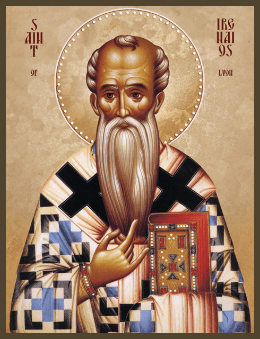
Irenaeus of Lyons (A.D. 180-189)
Against Heresies, V:16:3
“And not by the aforesaid things alone has the Lord manifested Himself, but [He has done this] also through His passion. For doing away with [the effects of] that disobedience of man which had taken place at the beginning by the occasion of a tree, “He became obedient unto death, even the death of the cross;” rectifying that disobedience which had occurred because of a tree, through that obedience which was [wrought out] upon the tree [of the cross]. Now He would not have come to do away, utilizing that same [image], the disobedience which had been incurred towards our Maker if He proclaimed another Father. But since it was by these things that we disobeyed God, and did not give credit to His word, so was it also by these same that He brought in obedience and consent as respects His Word; by which things He clearly shows forth God Himself, whom indeed we had offended in the first Adam when he did not perform His commandment. In the second Adam, however, we are reconciled, being made obedient even unto death. For we were debtors to none other but to Him whose commandment we had transgressed at the beginning.”
Irenaeus discusses the theological concepts of disobedience, obedience, and reconciliation in the context of Christian belief, specifically drawing on the figures of Adam and Christ. The passage opens with the assertion that God has revealed Himself not just through various means but significantly through the suffering and passion of Jesus Christ. This suggests that how Jesus lived and died is a critical aspect of understanding God’s nature. The author references the story of Adam and Eve in the Garden of Eden, where humanity’s disobedience originated by eating from the Tree of Knowledge. This act of defiance is portrayed as the root of humanity’s estrangement from God. In contrast to Adam’s disobedience, Jesus (referred to as the “second Adam”) demonstrated perfect obedience, culminating in His death on the cross. The phrase “He became obedient unto death” emphasizes Christ’s sacrificial nature and His willingness to fulfill God’s command, even at the cost of His own life.
Irenaeus points out the significance of using the “tree” imagery in both cases—both in Adam’s transgression and Christ’s obedience. This parallelism illustrates how God addresses the very issues that led to humanity’s fall. The argument concludes with the idea that because Jesus was obedient, we are now reconciled to God. He restored the relationship that was damaged by the first Adam’s disobedience. The “second Adam” represents the possibility for redemption and restoration of humanity’s original standing with God. The text, then, emphasizes that our ultimate obligation is to God—the very being whose command was violated in the beginning. This highlights the concept of accountability in the Christian faith, suggesting that individuals are morally responsible for their actions, particularly in relation to God’s commandments.
In summary, this passage articulates a fundamental narrative of Christian theology that contrasts humanity’s disobedience through Adam with Christ’s obedience, which offers a path to reconciliation with God. It underscores the significance of Christ’s sacrifice and the hope for redemption that arises from it.
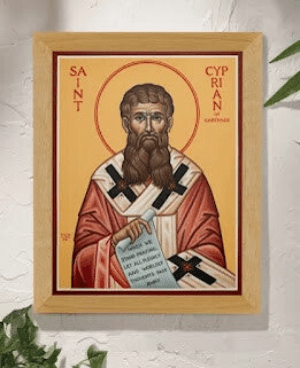
Cyprian of Carthage (A.D. 250)
Epistle to Fidus, 68[64]:5
“If, in the case of the worst sinners and of those who formerly sinned much against God, when afterward they believe, the remission of their sins is granted, and no one is held back from Baptism and grace, how much more, then, should an infant not be held back, who, having but recently been born, has done no sin, except that, born of the flesh according to Adam. He has contracted the contagion of that old death from his first being born. For this reason, he approaches more easily to receive the remission of sins because the sins forgiven him are not his own but those of another [from Adam].”
Cyprian of Carthage, a prominent early Christian theologian and martyr, significantly shaped early Christian thought, particularly concerning the concepts of baptism and grace. One of his key contributions to theology is his understanding of baptism as essential for salvation.
In his works, Cyprian highlights the importance of the sacrament of baptism as a means of receiving God’s grace and forgiveness. He strongly believed that all individuals, regardless of the gravity of their past sins, could attain forgiveness through true faith. This perspective extends to infants, whom he viewed as innocent yet burdened by original sin inherited from Adam. Cyprian argued that if those who have committed severe sins can receive divine grace upon their repentance and acceptance of faith, then infants who have not yet sinned personally should certainly be welcomed into the grace of God through baptism. He posited that infants are in a unique position to receive remission of sins, as their need for salvation is grounded not in personal wrongdoing but in the inherent sinfulness that comes from humanity’s fall through Adam.
This theological standpoint underlines the inclusive nature of God’s grace and highlights the church’s role in administering the sacrament of baptism as a means of initiating individuals—regardless of their moral history—into the Christian faith and community. Cyprian’s teachings emphasize God’s mercy and the belief that baptism is a fundamental act of faith that opens the path to salvation for all, including the most vulnerable, like infants.
Cyril of Jerusalem (A.D. 350)
Catechetical Lectures, 2:4-5
“Through him, our forefather Adam was cast out for disobedience and exchanged a Paradise bringing forth wondrous fruits of its own accord for the ground which bringeth forth thorns. What then? Someone will say. We have been beguiled and are lost. Is there, then, no salvation left? We have fallen: Is it not possible to rise again? We have been blinded: May we not recover our sight? We have become crippled: Can we never walk upright? In a word, we are dead: May we not rise again? He that woke Lazarus who was four days dead and already stank, shall He not, O man, much more easily raise thee who art alive? He who shed His precious blood for us shall Himself deliver us from sin.”
The text attributed to Cyril of Jerusalem reflects on the themes of sin, fallenness, and redemption. It begins by referencing the biblical story of Adam, who was cast out of Paradise due to his disobedience to God. This act symbolizes the loss of a perfect state of existence and the beginning of human suffering, represented by the “ground that brings forth thorns.”
Cyril raises a series of rhetorical questions to provoke thought about human desolation and the hope for salvation. The questions express a deep sense of despair regarding humanity’s spiritual condition—having fallen from grace, being metaphorically blind, crippled, and dead. This illustrates the gravity of sin and its effects on mankind, conveying a sense of hopelessness in the natural human condition.
However, the text transitions from despair to hope. By invoking the miracle of Lazarus, who was resurrected after four days, Cyril emphasizes that if God can raise someone who was undeniably dead, He can certainly restore those who are spiritually lost but still alive. This notion speaks to the transformative power of divine intervention and highlights God’s grace and mercy.
Finally, the mention of Christ shedding His blood reinforces the idea of sacrifice and redemption. It affirms the belief that through Jesus’ suffering and death, humanity is offered a path back to salvation from sin. Overall, the text serves as a theological reflection on the depths of human sinfulness contrasted with the heights of divine grace, encouraging believers to have faith in the possibility of spiritual rejuvenation and resurrection.
Athanasius of Alexandria (A.D. 358)
Against the Arians, I:51
“And this thought commends itself strongly to the right-minded. For since the first man Adam altered, and through sin death came into the world; therefore it became the second Adam to be unalterable; that, should the Serpent again assault, even the Serpent’s deceit might be baffled, and, the Lord being unalterable and unchangeable, the Serpent might become powerless in his assault against all. For as when Adam had transgressed, his sin reached unto all men, so, when the Lord had become man and had overthrown the Serpent, that so great strength of His is to extend through all men, so that each of us may say, ‘For we are not ignorant of his devices’ Good reason then that the Lord, whoever is in nature unalterable, loving righteousness and hating iniquity, should be anointed and Himself’ sent, that, He, being and remaining the same, by taking this alterable flesh, ‘might condemn sin in it,’ and might secure its freedom, and its ability henceforth ‘to fulfill the righteousness of the law’ in itself, to be able to say, ‘But we are not in the flesh but in the Spirit, if so be that the Spirit of God dwelleth in us.’”
Athanasius’s work “Against the Arians” is a foundational text in developing Christian doctrine, particularly concerning the nature of Christ and His relationship to the Father. In this text, Athanasius vigorously defends the orthodox understanding of the Trinity against the Arian claim that the Son (Jesus Christ) was a created being, distinct from and subordinate to God the Father.
Athanasius argues that Christ is truly divine, affirming His co-eternity and consubstantiality with the Father. He emphasizes that if the Son were a created being, He could not truly mediate between God and humanity or effect salvation, as only God can fulfill such a role. The author explains the importance of the Incarnation, where the divine Word became flesh. He asserts that the Son took on human nature not to become a different entity but to redeem humanity. His divine nature and human nature coexist fully in one person, underscoring the significance of Christ’s dual nature in theological and soteriological contexts.
Athanasius employs biblical texts to establish Christ’s divinity, interpreting passages from the Gospels and the Old Testament that affirm Christ’s eternal existence and His active role in creation. He emphasizes that Scripture reveals the Son as Lord and God, refuting Arian’s claims of His being a lesser being. He argues that denying the full divinity of Christ undermines the entire Christian faith. If Christ is not fully God, then His sacrifice is insufficient for the salvation of humanity. He posits that understanding Christ as both God and man is essential for comprehending the redemption offered to believers.
Throughout “Against the Arians,” Athanasius appeals to the Church’s tradition, highlighting the consensus among early Christian leaders regarding the nature of Christ. He urges adherence to orthodox teachings that have been upheld throughout the ages. Athanasius’s work is also a call to defend and uphold the truths of the Christian faith in the face of heretical teachings. He recognizes the danger of Arian thought and encourages believers to remain steadfast in their understanding of the Trinity.
In 1:51, Athanasius discusses the theological concept of redemption through the figure of the “second Adam,” which refers to Jesus Christ as opposed to the first man, Adam. The author begins by establishing a theological framework: when Adam, the first human, sinned, he introduced death and sin into the world. This act of transgression altered the state of humanity, leading to a universal consequence for all men. In contrast, the “second Adam,” or Christ, is portrayed as unalterable and unchangeable. This is significant because, in the face of the Serpent (symbolizing evil or temptation), Christ’s unchangeable nature ensures that He can resist and ultimately overcome the deceit and assaults of evil. The text emphasizes that while Adam’s sin had widespread repercussions, Christ’s redemptive power is also intended to extend to all humanity, providing them with the ability to overcome sin.
Moreover, the author argues that Christ’s unchangeable nature means that He can embody righteousness and reject iniquity. By assuming human flesh—that which is alterable—He could “condemn sin” and liberate humanity from its grasp. This act of taking on human form allowed Him to fulfill the righteousness of the law, demonstrating a pathway for believers to live according to the Spirit rather than being dominated by the flesh.
In essence, the overarching message is one of hope and empowerment for humanity. It suggests that through faith in Christ, individuals can access the strength needed to resist temptation and sin. The conclusion highlights that those who are aligned with the Spirit of God are not bound by their original sinful nature but instead are empowered to live righteously. This reflects a transformational shift from death to life, from sin to righteousness, through the figure of Christ.
Ambrose of Milan (A.D. 380)
On the Death of his brother Satyrus, II:6
“For death is alike to all, without difference for the poor, without exception for the rich. And so although through the sin of one alone, yet it passed upon all; that we may not refuse to acknowledge Him to be also the Author of death, Whom we do not refuse to acknowledge as the Author of our race; and that, as through one death is ours, so should also be the resurrection; and that we should not refuse the misery, that we may attain to the gift. As we read, Christ ‘is come to save that which was lost,’ and ‘to be Lord both of the dead and living.’ In Adam, I fell; in Adam, I was cast out of paradise, and in Adam, I died; how shall the Lord call me back, except He finds me in Adam, guilty as I was in him, so now justified in Christ. If death is the debt of all, we must be able to endure the payment. But this topic must be reserved for later treatment.”
The text reflects a theological understanding of death, sin, and redemption, drawing from Christian doctrine. The opening statement emphasizes that death is an inevitable part of human existence, affecting everyone regardless of their social status or wealth. This underscores the idea of equality in mortality, highlighting that earthly distinctions are rendered meaningless in the face of death.
The reference to “the sin of one person” alludes to the biblical story of Adam and Eve in the Book of Genesis. Adam’s transgression is depicted as the catalyst for death entering the world, symbolizing humanity’s fallen state. This notion reflects the doctrine of original sin, where all humans inherit a sinful nature due to Adam’s actions.
Ambrose acknowledges God as the “Author of both death and our existence,” suggesting that death, while a consequence of sin, is also part of God’s overarching plan. This characterization portrays God not only as a creator but as one who has authority over both life and death. The assertion that “resurrection should follow” indicates a belief in life after death, specifically the Christian hope of resurrection through Christ. It connects suffering and acknowledgment of sin with the possibility of receiving salvation and eternal life.
The quotes from scripture emphasize Christ’s role in salvation, framing him as the one who came to redeem humanity from sin and death. This signifies hope and restoration, indicating that while humanity fell through Adam, they can be justified through faith in Christ. Moreover, the author expresses a personal journey of understanding sin and redemption, acknowledging their guilt in Adam yet finding hope in Christ. This introspection highlights the individual nature of faith and the journey toward spiritual reconciliation.
By stating that “death is a debt we all owe,” it captures the idea that mortality is an unavoidable aspect of human life, a consequence of sin that must be faced. The mention of needing further exploration suggests that this theme of death and redemption is complex and merits deeper theological discussion. Overall, this text profoundly contemplates mortality, sin, and the promise of redemption through Christ, emphasizing both the universality of death and the hope offered by faith.
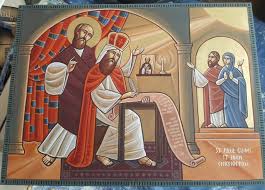
John Chrysostom (A.D. 391)
Homily on Romans, 10
“How then did death come in and prevail? “Through the sin of one.” But what means, “for that all have sinned?” This; he having once fallen, even they that had not eaten of the tree did from him, all of them, become mortal…From whence it is clear that it was not this sin, the transgression, that is, of the Law, but that of Adam’s disobedience, which marred all things. Now, what is the proof of this? The fact that even before the Law all died: for ‘death reigned’ he says, ‘from Adam to Moses, even over them that had not sinned.’ How did it reign? ‘After the similitude of Adam’s transgression, who is the figure of Him that was to come.’ Now, this is why Adam is a type of Christ … When the Jew says to thee, How came it that by the well-doing of this one Person, Christ, the world was saved? Thou mightest be able to say to him, How by the disobedience of this one person, Adam, came it to be condemned?”
John Chrysostom delves into the theological implications of sin and death as represented in Christian doctrine, particularly referencing the biblical accounts of Adam and Christ. The phrase “through the sin of one” refers to the narrative in Genesis where Adam disobeys God by eating from the forbidden tree. This act is portrayed as the original sin that introduces death into the human experience. The text implies that Adam’s disobedience was not just a simple act of sin but a profound turning point that affected all humanity. When it states, “for that all have sinned,” it emphasizes that Adam’s fall resulted in a sinful nature being inherited by all of humanity. This suggests that death is not just a physical end but a spiritual condition impacting every person. The idea that those who had not sinned like Adam still died underscores the belief that the consequences of sin extend beyond individual actions.
Chrysostom points out that death reigned from Adam until Moses, a time frame that indicates the pervasive nature of sin. It emphasizes that death was present and had authority even before the Mosaic Law was given, indicating that mortality and spiritual corruption are intrinsic human conditions rather than merely violations of codified laws. The comparison of Adam to Christ is significant here. Adam is described as a “type” of Christ, suggesting that just as Adam’s disobedience brought death, Christ’s obedience and good deeds bring salvation. This establishes a theological parallel, where the acts of one person (Adam) lead to widespread consequences, while the acts of another (Christ) lead to redemption.
The rhetorical question posed in response to a Jewish inquiry about salvation through Christ’s deeds reflects the intricacy of the discussion. It draws a parallel between the mechanisms of condemnation and salvation, challenging the idea that only individual actions determine one’s fate. The text invites a deeper understanding of how interconnected human actions contribute to both despair and hope.
In summary, the text explores the theological lineage of sin and redemption, illustrating how the narrative of Adam’s disobedience versus Christ’s righteousness is a foundational element in Christian belief. It reaffirms the idea that what began with one man’s fall could be countered by one man’s righteousness, underpinning the overall theme of grace and salvation.
Pacian (ante A.D. 392)
Sermons on Baptism, 2,6
“After Adam sinned, as I noted before, when the Lord said, ‘You are earth, and to earth, you shall return,’ Adam was condemned to death. This condemnation was passed on to the whole race. For all sinned, already by their sharing in that nature, as the Apostle says: “For through one man sin made its entry, and through sin death, and thus it came down to all men because all have sinned…Someone will say to me: But the sin of Adam deservedly passed on to his posterity, because they were begotten of him: but how are we to be begotten of Christ, so that we can be saved through Him? Do not think of these things in a carnal fashion. You have already seen how we are begotten by Christ our Parent. In these last times, Christ took a soul and with it flesh from Mary: this flesh came to prepare salvation.”
Pancian discusses the theological concept of original sin and its implications for humanity. It begins with the biblical narrative of Adam, whose sin in the Garden of Eden led to the condemnation of death—not just for himself, but for all of humanity. This idea is rooted in the Old Testament when God tells Adam, “You are dust, and to dust you shall return,” highlighting the significance of human mortality and the consequence of sin.
The reference to the Apostle emphasizes that through Adam’s sin, death entered the world, signifying that all humans inherit this sinful nature, leading to spiritual death. The author acknowledges a common objection: that Adam’s sin is directly inherited by his descendants simply because they are his offspring. However, he challenges readers to think beyond a physical or biological understanding.
Pancian introduces the concept of being “born of Christ” as a means of salvation. This suggests a spiritual rebirth or transformation distinct from biological lineage. In Christian theology, this is often linked to the idea of being “born again,” a rebirth through faith in Christ. The mention of Christ taking on flesh from Mary points to the Incarnation, where the Divine Logos becomes human to provide salvation. This act is portrayed as a crucial part of God’s plan to redeem humanity from the consequences of original sin.
Overall, the text emphasizes the interconnectedness of sin, death, and the hope for salvation through Christ, shifting the perspective from a purely physical understanding of inheritance to a spiritual one.

Augustine of Hippo (A.D. 415)
On Nature and Grace, 4
“This grace, however, of Christ, without which neither infants nor adults can be saved, is not rendered for any merits, but is given gratis, on account of which it is also called grace. ‘Being justified,’ says the apostle, ‘freely through His blood.’ Whence they, who are not liberated through grace, either because they are not yet able to hear, or because they are unwilling to obey, or again because they did not receive, at the time when they were unable on account of youth to hear, that bath of regeneration, which they might have received and through which they might have been saved, are indeed justly condemned; because they are not without sin, either that which they have derived from their birth or that which they have added from their own misconduct. ‘For all have sinned’–whether in Adam or in themselves–“and come short of the glory of God.’”
Augustine discusses the concept of grace in relation to salvation, emphasizing that it is a fundamental gift from Christ that is not based on an individual’s merits or actions. This grace is essential for both infants and adults, indicating that all people, regardless of their understanding or ability to obey, rely on this divine grace for salvation.
The phrase “justified freely through His blood” highlights the belief that salvation results from Christ’s sacrifice rather than human effort or worthiness. It suggests that salvation is a gift that cannot be earned. The author also addresses the consequences for those not receiving this grace. It notes that individuals who fail to attain salvation—whether due to lack of understanding, opportunity, or willingness—face condemnation. This condemnation arises not from their inability to receive grace but from the inherent sinfulness of humanity; all people are born with original sin and commit personal sins.
The final quotes reinforce the idea that “all have sinned.” This includes both the sin inherited from Adam and the sins individuals commit throughout their lives. Thus, Augustine emphasizes the universal need for grace to be reconciled with God and attain salvation, as all fall short of God’s glory.
“But the things that come out of the mouth come from the heart, making a man unclean.
For out of the heart come evil thoughts, murder, adultery, sexual immorality, theft, false
testimony, slander. These are what make a man unclean, but eating with unwashed hands
does not make him unclean.”
Matthew 15, 18-19

Pax vobiscum
 Catholicity
Leave a comment