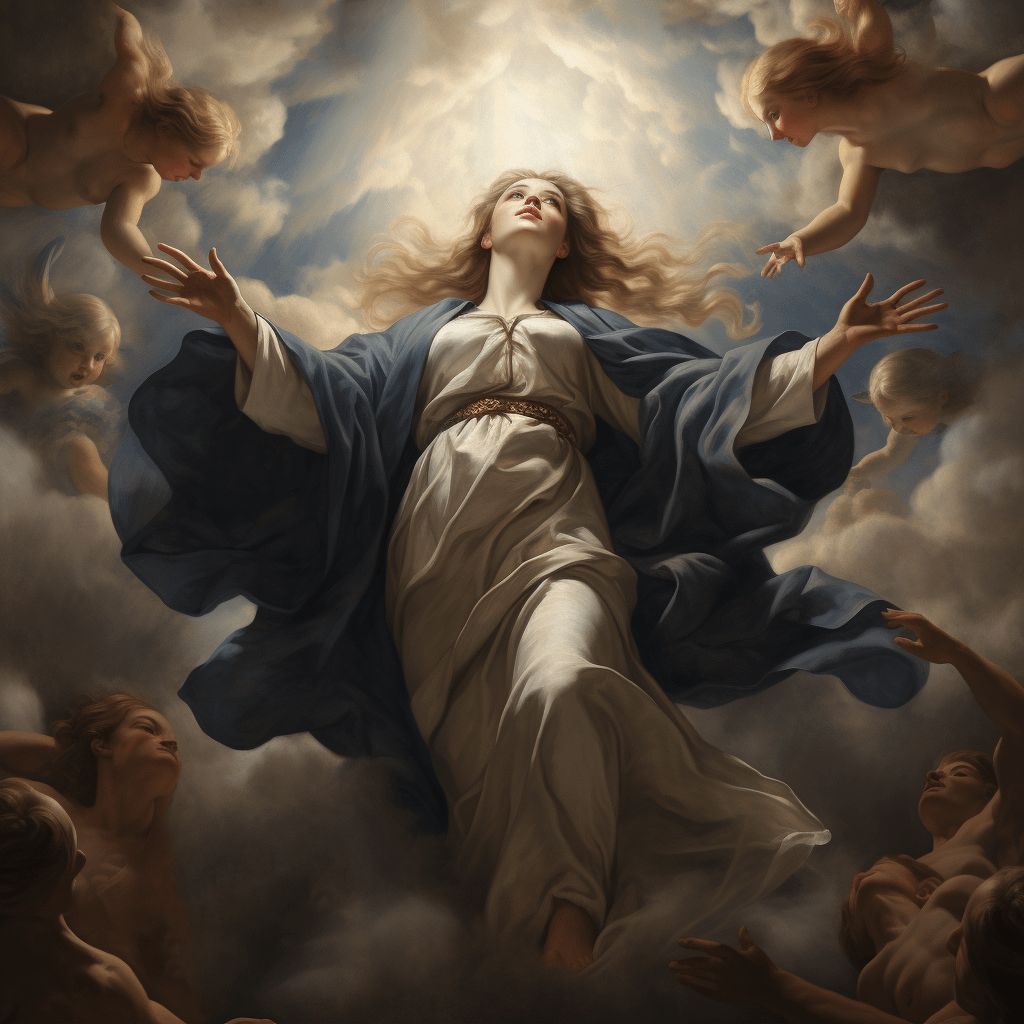
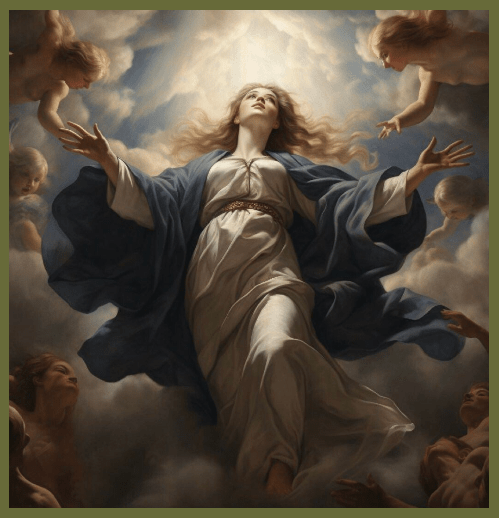
THE ASSUMPTION OF THE BLESSED VIRGIN MARY
I will greatly rejoice in the Lord,
and my soul shall be joyful in my God:
for he hath clothed me with the garments of salvation:
and with the robe of justice he hath covered me,
as a bridegroom decked with a crown,
and as a bride adorned with her jewels.
Isaiah 61, 10
At that time, I will bring you home,
at the time when I will gather you together;
yea, I will make you renowned and praised
among all the peoples of the earth,
when I restore your fortunes
before your eyes, says the Lord.
Zephaniah 3, 20
I will perpetuate your memory through all generations;
therefore the nations will praise you forever and ever.
Psalm 45, 17
When the Lord restored the fortunes of Zion,
then we thought we were dreaming.
Our mouths were filled with laughter;
our tongues sang for joy.
Then it was said among the nations,
“The Lord has done great things for them.”
The Lord has done great things for us;
Oh, how happy we were.
Psalm 126, 1-3
ἰδοὺ γὰρ ἀπὸ τοῦ νῦν μακαριοῦσί με πᾶσαι αἱ γενεαί
Sacred Scripture frequently reaffirms elements of Catholic Tradition by utilizing specific words and expressions that the authors of the Biblical texts employed under the guidance of the Holy Spirit. This interplay between Scripture and Tradition enables the Church to gain a deeper understanding of God’s intended revelations regarding faith and morals. Importantly, this understanding arises regardless of whether the Biblical authors were consciously aware of the divine intention behind their writings, a concept known as sensus plenior.
Sensus plenior, which translates to “fuller sense,” is a theological concept in Catholic biblical exegesis that indicates a deeper or more complete meaning of Scripture beyond the literal or obvious interpretation. This understanding suggests that biblical texts can have meanings that were not fully apparent to the original human authors or their immediate audiences, but which can be realized in the light of the New Testament and the broader revelation of God. In practice, this means that certain passages may foreshadow or hint at themes and truths that become fully revealed in later texts or through the life and ministry of Jesus Christ. For example, a prophecy in the Old Testament may gain a fuller understanding when connected to events in the New Testament. This approach to scripture emphasizes that the Holy Spirit guides the interpretation of biblical texts, allowing deeper meanings to be understood within the context of salvation history as a whole.
Moreover, the selection of words and phrases in Scripture can extend beyond their immediate or primary contexts, especially in prophetic texts. A notable example is found in Isaiah 7:14, which prophesies the virgin birth of a child, a theme that Matthew directly quotes in his Gospel (Mt 1:23) to affirm the reality of Christ’s incarnation. This connection highlights the continuity between the Old and New Testaments. It underscores the Church’s belief in the unity of God’s revelation over time, enriching the faithful’s understanding of key doctrinal truths.
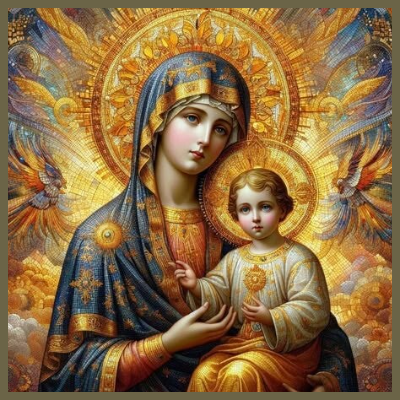
In her Canticle of Praise, commonly known as the Magnificat, Mary makes a profound theological declaration: “Behold, from henceforth, all generations shall call me blessed.” This statement is rich in meaning and has been the subject of debate and interpretation among various Christian denominations. For many non-Catholic Christians, Mary’s proclamation of being “blessed” (from the Greek word “makaria“) is understood primarily as an acknowledgment of her extraordinary role as the chosen mother of Jesus Christ. This favor from God highlights her unique position within the Christian narrative.
In its most immediate sense, the prophecy Mary’s utterance embodies has been fulfilled. Mary’s motherhood of Jesus is a pivotal aspect of the Christian faith; without her willingness to accept this divine call, the Incarnation would not have occurred. Therefore, her blessedness is intimately tied to her role in salvation history, and Christians celebrate this singular grace. The acknowledgment of Mary as the “blessed one” honors not only her but also the divine plan that was realized through her.
However, the depth of Mary’s prophecy extends beyond this initial interpretation, alluding to a secondary fulfillment that the evangelist emphasizes in the subsequent verse: “Because the Almighty has done great things to me, and holy is His name.” Here, Mary reflects on the extraordinary blessings and privileges God has bestowed upon her. The “great things” she speaks of encompass not only her Divine Maternity but also the privileges that flow from it and signify the transformative nature of her role in God’s plan for humanity.
Mary’s blessedness is, therefore, not just a static recognition but a dynamic celebration of God’s work in her life and, by extension, in the lives of believers. This acknowledgment underscores the holiness of God’s name and serves as a reminder to the faithful of the humility and grace that characterized Mary’s response to her calling. As such, her prophecy affirms her honor as the mother of Christ.
The original Greek term that Luke employs for the phrase “being pronounced blessed” is makarizó (μακαρίζω). In the context of this passage, it can be interpreted as conveying the idea of being pronounced blessed for enjoying unique privileges arising from God’s favor, particularly those associated with the Divine Maternity. This highlights that the “great things” God has achieved for Mary are not merely historical events but profound blessings that flow from her extraordinary role as the Mother of God, foreshadowed in Isaiah 7:14 and described in Luke 1:35 and 1:43.
Mary’s unparalleled status is celebrated in the Christian tradition. Future generations of believers will not only honor her for her selection from among all women to bear Jesus but also rejoice alongside her for the exceptional privileges and graces she has received as a result of this divine choice. This divine motherhood enriches our understanding of her role, symbolizing the deep connection between humanity and the sacred.
The Greek word for “blessed,” as it pertains to Mary, transcends a mere honorary designation; it embodies a profound benediction that actively promotes goodness, grace, and well-being. This is particularly pertinent to Mary, who holds a unique position as the Mother of the Divine Messiah, Jesus Christ. The term carries significant implications for her personal relationship with God, reflecting her extraordinary role in the supernatural life of grace.
Mary is not just any figure; she represents an archetype of holiness and virtue, which future generations will universally recognize and affirm. The blessings conferred upon her are singular, stemming from her special maternal relationship with Christ and her unparalleled participation in the divine plan of salvation. These privileges—often referred to as her “exalted status”—are intrinsically linked to her association with Jesus in his redemptive mission. Her role extends beyond merely giving birth to the Messiah; she actively participates in the unfolding of God’s salvific work.
In essence, Jesus was not merely “made of a woman” to inherit humanity; rather, Mary’s role as his mother signifies a deep theological truth about the incarnation and the significance of her influence in Christ’s life and the broader tapestry of redemption. Her blessedness reflects her unique cooperation with God’s grace and purpose throughout history.
Protestant biblical scholar Donald G. Dawe offers an insightful exegesis of Luke 1:48, focusing on the significance of the Greek term “blessed,” which is translated as “makaria.” Dawes emphasizes that this term transcends mere polite honorific function; it embodies a deeper spiritual dimension, particularly highlighted in Patristic literature. When examining the concept of blessedness in this context, Dawe notes that it was often used to describe martyrs, individuals who endured suffering and persecution for their faith. He elaborates, stating, “The highest expression of their blessedness was in the possibility of their ascension into heaven to dwell in the immediate presence of God” (The Assumption of the Blessed Virgin in Ecumenical Perspective).
This perspective suggests that the blessing of martyrs is intrinsically tied to their ultimate destiny: a union with God in heaven. This notion extends beyond the idea of being blessed merely for making sacrifices; it encompasses the comprehensive fulfillment of faith through acts informed by deep love, charity, and divine grace. In parallel, this understanding of blessedness can also be applied to Mary, the mother of Jesus. Dawe contends that Mary’s blessedness is not solely the result of her faithful consent to bear the Son of God, but is also connected to the eschatological promise of salvation and reunion with God that her acceptance represents. From this broader eschatological perspective, the significance of both the martyrs and Mary lies in the ultimate consummation of their faithful acts, an outcome rooted in their relationship with God and the transformative power of grace.
In short, Dawe encourages readers not to view blessedness as a static quality, but rather as a dynamic expression of faithfulness that culminates in a profound and eternal communion with God. This marks the culmination of martyrdom and Mary’s unique role in salvation history. The connection to eschatology reveals the depth of their experiences, pointing toward an eternal reality that transcends their earthly journeys.
In the Sermon on the Mount, Jesus declares, “Blessed (makaria) are the pure in heart, for they shall see God” (Mt 5:8). This beatitude emphasizes that the ultimate manifestation of being blessed lies in the spiritual vision of God, an honor reserved for those whose hearts are cleansed from sin and filled with sincerity. The purity of the heart is not merely a moral condition but a transformative state that enables believers to experience the divine presence. Similarly, the notion of blessing in relation to the Virgin Mary extends beyond her unique role as the Mother of God. While her divine motherhood is a pivotal aspect of her blessedness, it is essential to understand that her state of grace and happiness is intricately tied to her unwavering faith and obedience to God’s will. Throughout generations, believers have recognized that Mary’s true blessedness stems not only from being chosen to bear the Divine Messiah but also from her personal relationship with God, characterized by humility, devotion, and a pure heart.
The prophetic verse found in the Gospel of Luke carries significant weight in relation to the Catholic dogmas of the Immaculate Conception and the Assumption of the Blessed Virgin Mary. This verse not only highlights Mary’s pivotal role in the Incarnation but also serves as a cornerstone in understanding her unique place in the divine economy of salvation. Through her cooperation with God’s will, Mary becomes integral to the unfolding of salvation history, exemplifying a singular collaboration that transcends ordinary human experience.
The Immaculate Conception, which asserts that Mary was conceived without original sin, underscores the notion that God specially graced her from the very beginning of her existence. This unique status enables her to bear Christ, the Savior, thus marking her as the Mother of God (Theotokos). The honor of this divine motherhood is not merely an accolade; it is a profound mystery that reveals the deep intimacy between Mary and the Holy Trinity. In this light, her role becomes not just functional but deeply relational, emphasizing her response to divine grace in a manner unparalleled in human history.
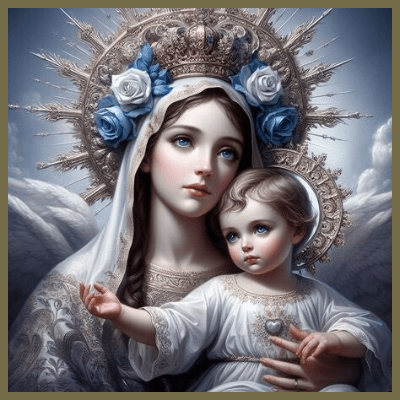
The Assumption of Mary into Heaven, body and soul, represents the fulfillment of her own salvific journey. While all the faithful rely on the hope of resurrection and divine redemption, as articulated in 1 Corinthians 15:20-23, Mary’s Assumption is a singular privilege bestowed upon her because of her unique cooperation in God’s plan. This event serves as a prefiguration of the ultimate destiny awaiting all believers. Yet, it distinguishes her by her unique relationship with Christ, established not only by her consent but also by her continuous fidelity throughout her life.
In the context of scripture, when Mary proclaims, “For behold, henceforth all generations will call me blessed,” she anticipates a special recognition beyond that accorded to any other saint. This proclamation is deeply prophetic, as it captures the essence of her role in salvation and the special grace that she has received. Unlike other faithful souls who hope for eternal communion with God, Mary’s promises of redemption and glorification predict a bodily redemption exclusive to her, reflecting the divine plan in a way that embodies both her role within the Incarnation and the Christian belief in the resurrection.
Mary’s blessedness is not solely a reflection of her faithfulness or of her ascension to heaven, but is deeply intertwined with her unique status as the Mother of God and her divine call. This profound relationship sets her apart in the grand narrative of salvation, allowing her to function as a powerful intercessor and a model of holiness for all generations. The honors and recognitions she receives are rooted in the deep mysteries of faith and ultimately reflect God’s love and plan for humanity.
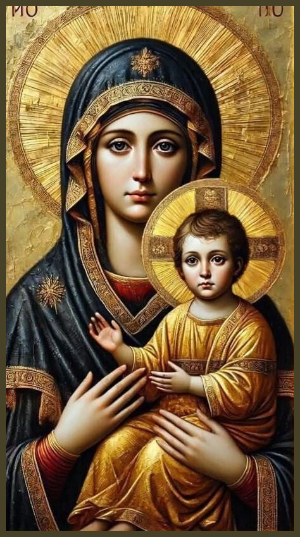
Luke 1:48 proclaims: “For behold from henceforth all generations shall call me blessed.” In the original Greek, the word “Behold” (ιδου, idŏu) serves as a demonstrative particle without a direct counterpart in English. Similar to the Hebrew term hinnēh, the Greek word is often employed to enliven a narrative, drawing attention to something remarkable or unprecedented. This particle frequently emphasizes the significance of an extraordinary event or truth, as illustrated in other passages (see Luke 1:31 and 2:10-11, KJB). For the faithful, the belief that a saint has died and entered Heaven is not viewed as extraordinary; it is a foundational aspect of Christian doctrine.
However, what is truly extraordinary and unparalleled is the Blessed Virgin Mary’s glorious Assumption—her being taken up body and soul into Heaven before the general resurrection. This unique event is attributed to her Divine Maternity and her exceptional privilege of being free from all forms of sin, both original and personal. In contrast to the other departed saints in Heaven, who must await the Second Coming of Christ for the resurrection of their bodies, Mary’s Assumption marks her singular position in salvation history. While the rest of the blessed souls remain in a state of repose, awaiting the general Resurrection at the end of the age (Rev 20:4-5), Mary’s experience is uniquely radiant.
The connotations of “Behold” extend beyond a mere declaration; they encompass a renewed and singular state of existence for Mary that transcends any change in her earthly circumstances at the moment of the Annunciation. The term carries the weight of divine intention and signifies something of profound prophetic importance that God wishes to illuminate for humanity. Therefore, when it is declared that all generations of Christians will call Mary blessed, it is not solely because of her unique role as the mother of Jesus. The faithful also acknowledge the “great things” that God has accomplished for her, specifically, the extraordinary privileges that arise from her singular grace and her unparalleled position in the history of salvation as the Mother of God. These considerations deepen the understanding of Mary’s role and elevate her status, inviting reverent recognition from the Church throughout the ages.
EARLY SACRED TRADITION
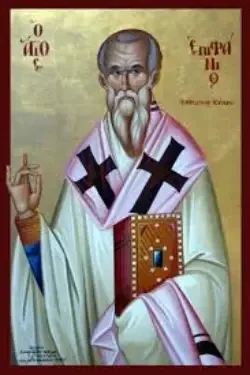
St. Epiphanius (A.D. 377)
Panarion, 78:23
If the Holy Virgin had died and was buried, her falling asleep would have been surrounded with
honour, death would have found her pure, and her crown would have been a virginal one…Had
she been martyred according to what is written: ‘Thine own soul a sword shall pierce’, then she
would shine gloriously among the martyrs, and her holy body would have been declared blessed;
for by her, did light come to the world.”
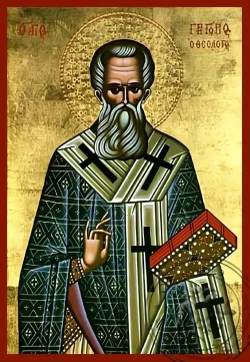
St. Gregory of Tours (A.D. 584)
Eight Books of Miracles, 1:8
“But Mary, the glorious Mother of Christ, who is believed
to be a virgin both before and after she bore him, has,
as we said above, been translated into paradise, amid the singing
of the angelic choirs, whither the Lord preceded her.”
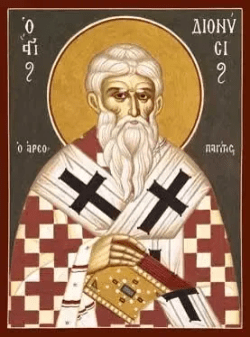
St. Theoteknos of Livias (c. A.D. 600)
Homily on the Assumption
“It was fitting … that the most holy body of Mary, God-bearing body, receptacle of God,
divinized, incorruptible, illuminated by divine grace and full glory … should be entrusted
to the earth for a little while and raised up to heaven in glory, with her soul pleasing to God.”
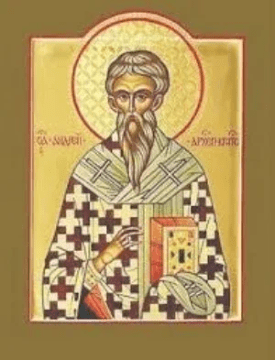
St. Germanus of Constantinople (A.D. 683)
Sermon I
“You are she who, as it is written, appears in beauty,
and your virginal body is all holy, all chaste, entirely the
dwelling place of God, so that it is henceforth completely exempt
from dissolution into dust. Though still human, it is changed into
the heavenly life of incorruptibility, truly living and glorious,
undamaged and sharing in perfect life.”
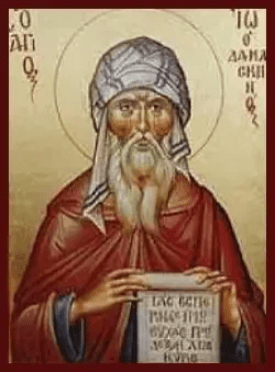
St. John Damascene (A.D. 697)
Dormition of Mary
“It was fitting that the she, who had kept her virginity intact in childbirth, should keep her own
body free from all corruption even after death. It was fitting that she, who had carried the
Creator as a child at her breast, should dwell in the divine tabernacles. It was fitting that the
spouse, whom the Father had taken to himself, should live in the divine mansions. It was fitting
that she, who had seen her Son upon the cross and who had thereby received into her heart the
sword of sorrow which she had escaped when giving birth to him, should look upon him as he sits with the Father, It was fitting that God’s Mother should possess what belongs to her Son, and that she should be honored by every creature as the Mother and as the handmaid of God.”
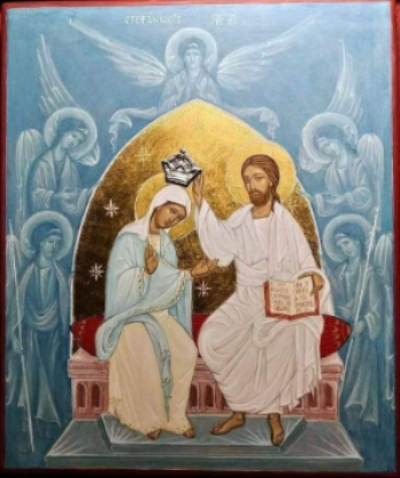
Arise, Lord, come to your resting place,
you and your majestic ark.
Psalm 132, 8

AVE MARIA


Leave a comment